
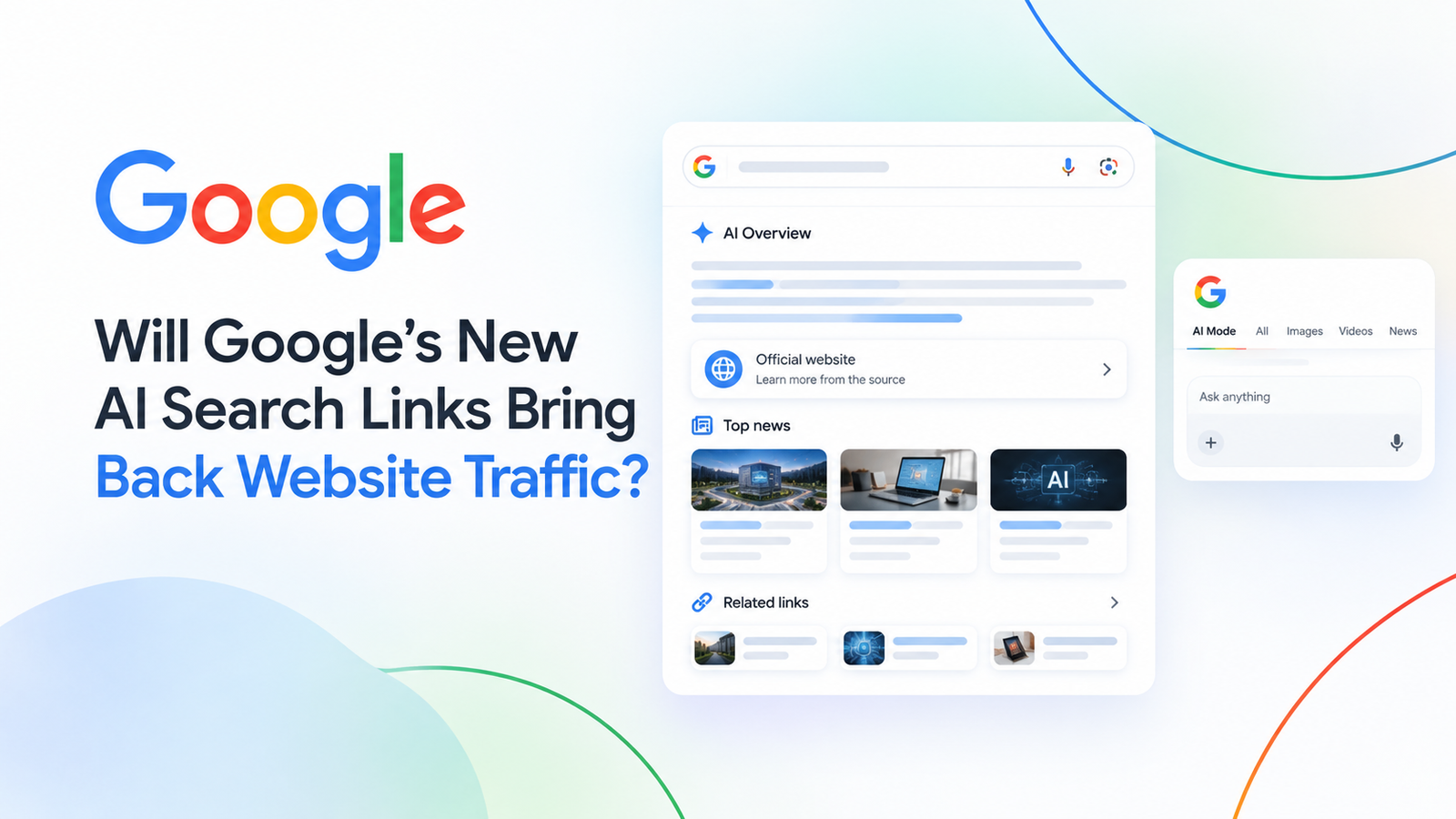
Google wants people to find websites more easily through its AI search results. But there is a problem: what if people can see the links more clearly and still have little reason to click them?
That question matters to news publishers, technology websites and anyone who depends on Google for visitors. Research suggests that people are less likely to click traditional search results when Google’s AI summaries appear. Now, Google is changing how links are presented. Could that make a difference, or will the same problem remain?
What has Google changed?
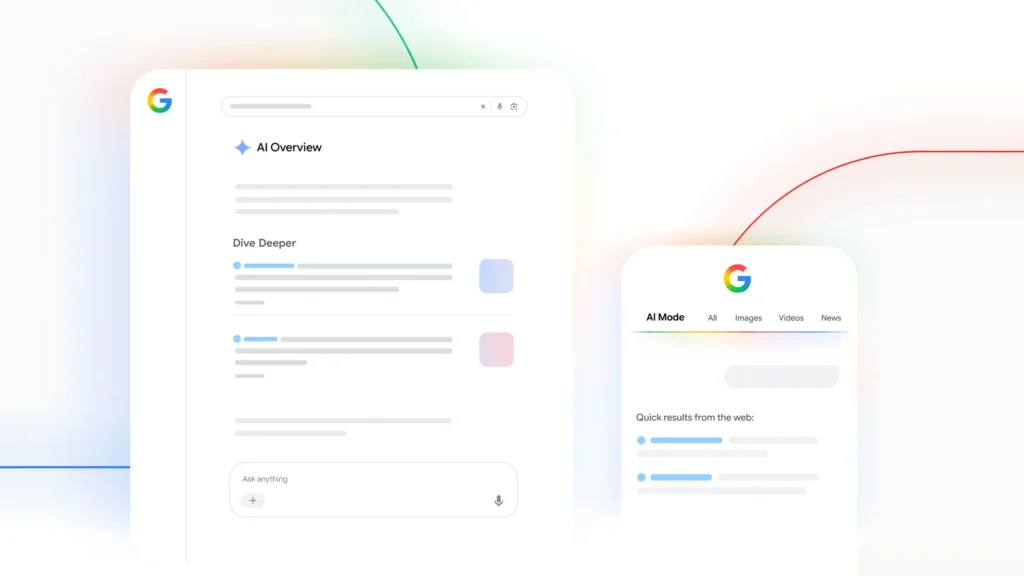
On October 15, 2026, Google announced several updates to AI Overviews and AI Mode. The changes are intended to help people discover websites and explore sources behind AI-generated answers.
Here is what Google announced:
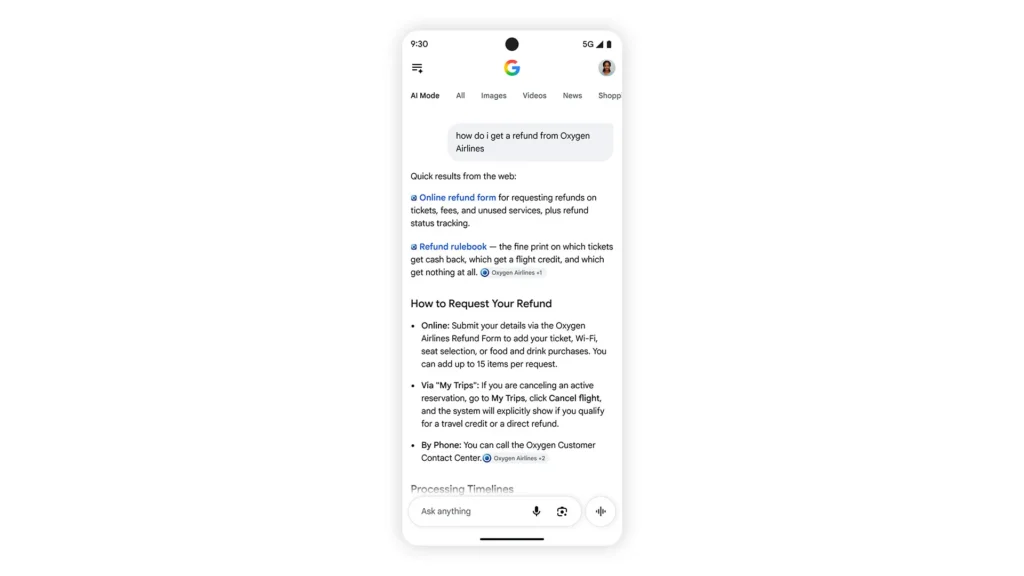
- Links higher in AI answers: Google is making inline links more visible and showing them higher in responses more frequently.
- More prominent official websites: Google is testing a dedicated section for certain searches where one or two official websites may be particularly useful. The section can explain why a link is worth visiting.
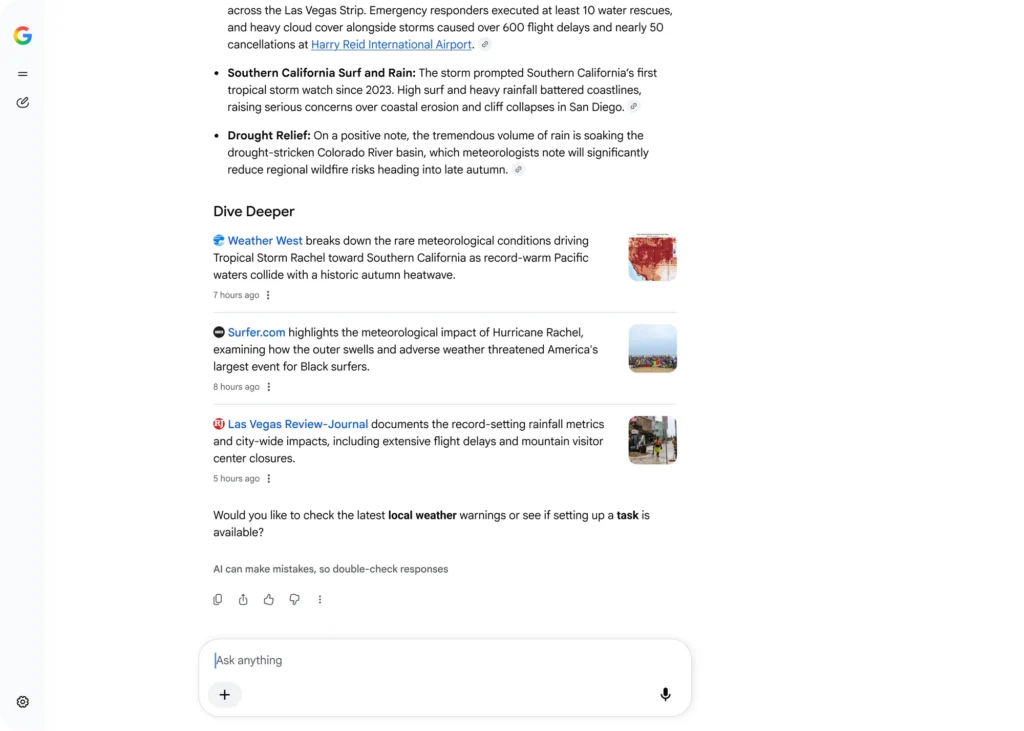
- More news carousels: Prominent displays of timely news articles are expanding to additional regions and languages.
- Related links that stand out: Some links at the end of AI responses will be presented more prominently, including through image thumbnails and a more clickable design.
- Clickable creator profiles: Google is testing clickable publisher and creator names on some video results, linking users to their Search profiles.
The goal is to make sources easier to discover. But there is an important distinction between making a link more noticeable and convincing someone to click it. Google has not yet published evidence showing how many additional website visits these particular changes will generate.
Source: Google’s official announcement.
What does the research say about search clicks?
To understand why publishers are concerned, it helps to look at what people actually do when AI summaries appear in search results.
Pew Research Center examined 68,879 Google searches made by 900 US adults during March 2025. When an AI summary appeared, users clicked a traditional search result in 8% of visits. When no AI summary appeared, they clicked a traditional result in 15% of visits. Links cited inside AI summaries were clicked in just 1% of visits where a summary appeared.
Research and data
Do AI Summaries Change Search Clicks?
Pew Research Center examined Google searches made by 900 US adults during March 2025. The figures below show how often different types of search links were clicked.
Traditional search results were clicked less often when an AI summary appeared in the results. Links cited inside AI summaries were clicked in 1% of visits. These findings concern earlier AI summaries, not Google’s October 2026 link changes.
Source: Pew Research Center, July 22, 2025. Study of 68,879 Google searches from 900 US adults during March 2025. Percentages describe observed clicks, not the effect of Google’s October 2026 redesign.
The difference is striking. Traditional results received clicks less often when an AI summary was present. Some users may have found the information they needed directly on the search page.
However, this study examined earlier AI summaries. It did not test Google’s October 2026 changes.
A separate field experiment published in 2026 provides further evidence. Researchers compared different Google search experiences and found that participants assigned to an AI Mode-only experience had a click-through rate 18.8 percentage points lower than participants using regular Google Search.
The experiment involved seven days of study and 1,100 participants eligible for behavioural analysis. It examined an AI Mode-only experience, not Google’s new link design. Its findings therefore cannot tell us whether the October changes will increase clicks.
Together, these studies raise an important question: if AI search can reduce clicks, can a more visible link encourage people to visit the original source?
Sources: Pew Research Center and the 2026 field experiment.
How much traffic are publishers losing?
The concern is not limited to individual search results. Publishers are also watching changes in the amount of traffic they receive from Google.
Chartbeat’s 2026 Publisher Playbook reports that referrals from Google Search to websites in its publisher network fell 40.2% between July 2025 and July 2026.
That is a substantial decline, but the details matter. Chartbeat’s data covers the publishers in its network, not every website. It also does not establish that AI search alone caused the decline.
For news publishers, the practical concern is clear. Fewer visits from search can mean fewer opportunities to introduce readers to their reporting, build an audience and encourage people to return.
The figures show why publishers are paying attention. They do not, however, tell us whether Google’s latest changes will reverse the trend.
Source: Chartbeat’s 2026 Publisher Playbook.
Could Google’s new links change that?
They might. The question is whether readers will respond differently when links are easier to see.
Consider two searches. Someone looking for a simple definition may be satisfied with an AI-generated answer and have no reason to open another page. A person investigating a cybersecurity incident or software vulnerability may need the original report, affected product versions, patch instructions and official technical guidance.
For the second reader, a more visible link could make it easier to find information that a short summary cannot fully provide. But that is a reasonable possibility, not a proven result.
The effect will depend on what people are searching for, how useful the available sources are and whether the links give them a compelling reason to continue reading.
Ultimately, visibility is only the first step. A click still depends on the reader.
What should smaller publishers do?
Smaller publishers cannot control how Google presents its results. They can, however, make their own reporting more useful to people who choose to visit.
For cybersecurity reporting, that means checking claims against vendor advisories and other primary sources, identifying affected versions, explaining the practical risks and linking to official fixes. For wider technology news, it means explaining what changed, who is affected and what remains uncertain.
A short AI summary may tell a reader that a vulnerability exists. A well-researched article can explain whether a particular product is affected, what the vendor recommends and what administrators should do next.
Publishers should also track their own results instead of relying entirely on industry-wide figures. Google Search Console provides search performance data, including reporting for visibility from generative AI features.
Website owners can compare clicks, impressions and click-through rates over equivalent periods. They should also keep track of changes to their websites and publishing schedules. A rise or fall in traffic does not, by itself, prove that a particular Google update caused it.
Source: Google Search Console’s generative AI reporting.
What happens next?
Google has announced changes intended to make sources easier to discover. Research has already shown that people may click fewer traditional search results when AI summaries appear. What remains unanswered is whether the new presentation will change that behaviour.
There are three things worth watching. Will readers click the newly prominent links more often? Will news carousels send additional visitors to publishers? And will smaller websites benefit, or will any gains mainly go to established sources?
Those questions need real traffic data, not assumptions based on how the new interface looks.
For now, Google’s changes give publishers a reason to pay attention, but they are not proof that the traffic problem has been solved.
More visible links may help readers discover a website. Accurate reporting, useful details and original analysis give them a reason to click, stay and return.


Community discussion
Join the conversation
0 comments
Be the first to join in
There are no comments yet. Sign in to start a thoughtful discussion.
Sign in to comment
Join the conversation with your Secritic account. Comments are available to signed-in readers.