
A large-scale Social Security database overhaul has brought renewed attention to a problem that can have serious consequences: inaccurate government records.
On October 20, 2026, the U.S. Social Security Administration (SSA) announced that it had corrected records associated with nearly 15% of active Social Security numbers. The work included adding 17 million dates of death to records that previously lacked them, updating approximately 25 million records with missing citizenship information, and addressing another 8.5 million records with inaccurate citizenship status.
The announcement describes a major effort to improve the accuracy of records used across government. But earlier government audits have documented problems involving death records, including cases in which living people were incorrectly recorded as deceased.
That history makes an important question worth examining: what safeguards protect people when the government relies on records that can be incomplete or incorrect, and what evidence shows that the latest overhaul will prevent future problems?
What the Social Security database overhaul changed
The SSA described its October 20 announcement as the most comprehensive Social Security number database cleanup in its 91-year history.
According to the agency, its records cover approximately 330 million U.S. citizens and nearly 390 million total records. The SSA said it had corrected records associated with nearly 15% of active Social Security numbers since the beginning of the Trump administration.
Commissioner Frank J. Bisignano explained the agency’s position in the official announcement:
“The Social Security Number database is our country’s books and records.”
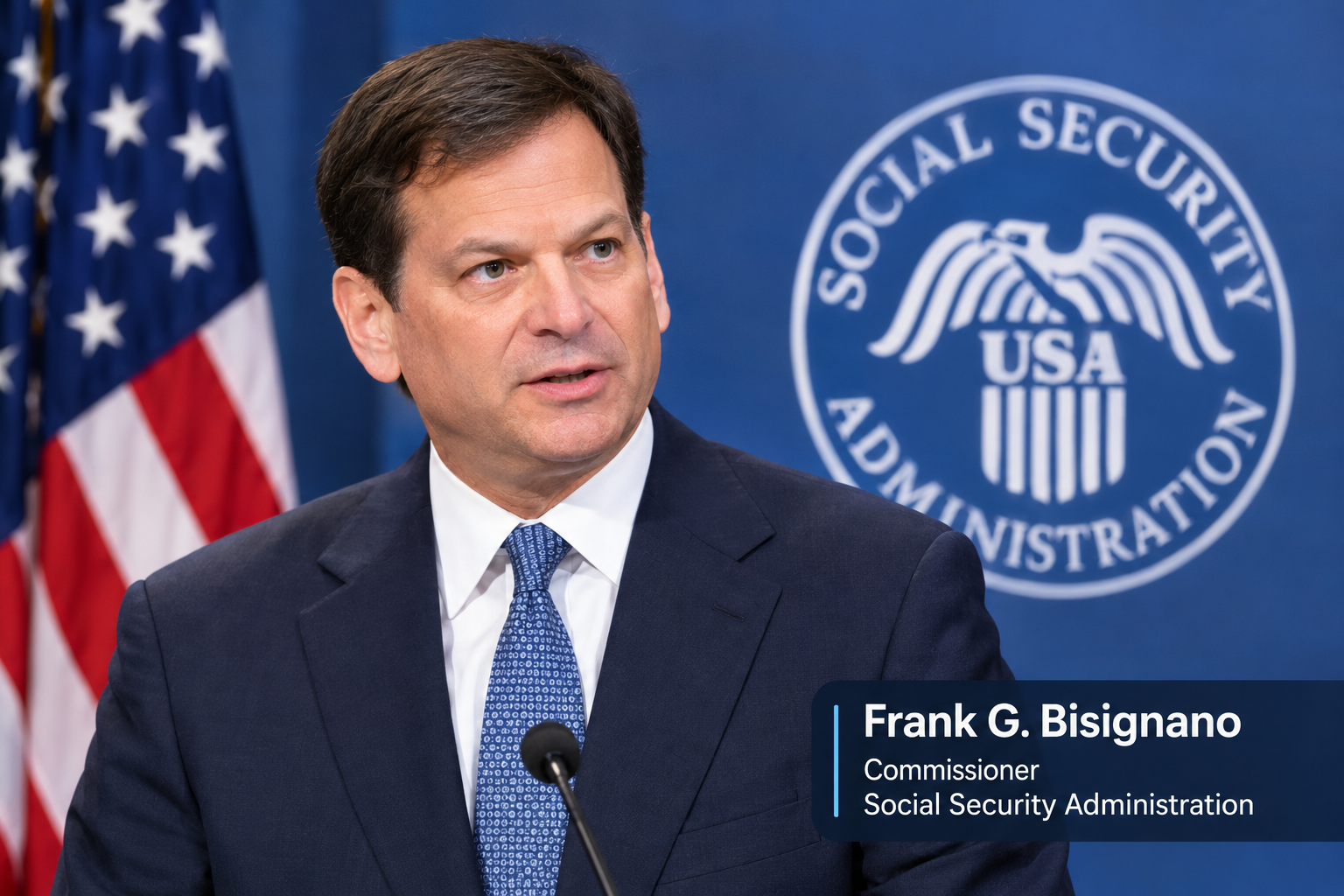
He said accurate records are important to government services, fraud prevention and the proper administration of benefits.
The cleanup includes three main areas of work.
What changed in the Social Security database?
Three areas of record-related work reported by the SSA on October 20, 2026.
Death dates added
Records that previously lacked death-date information.
INFORMATION ADDEDCitizenship records updated
Records missing citizenship information, updated using DHS SAVE data.
INFORMATION UPDATEDCitizenship records being corrected
Records with inaccurate citizenship status still under correction.
WORK IN PROGRESSThese figures are not a verified count of unique people. Missing citizenship information alone does not establish fraud or noncitizenship.
Seventeen million dates of death added
The SSA said it added 17 million dates of death to records that previously lacked this information, using its own systems and data from the U.S. Department of State.
This does not mean the agency discovered 17 million previously unknown deaths. The announcement says it added missing death information to existing records.
Approximately 25 million citizenship records updated
The agency said it updated approximately 25 million records that previously lacked citizenship information. It used data received from the Department of Homeland Security’s Systematic Alien Verification for Entitlements (SAVE) service.
Missing citizenship information is not, by itself, proof that someone is not a U.S. citizen or has committed fraud. It means the relevant record previously lacked the information described by the agency.
Another 8.5 million records still being corrected
The SSA also said it was working to correct an additional 8.5 million records with inaccurate citizenship status. This work was still in progress when the agency published its announcement.
The figures should not be treated as a count of unique people affected. The announcement does not fully explain how the figures overlap or provide enough detail for readers to independently reproduce the nearly 15% calculation.
Why inaccurate Social Security records can have serious consequences
The concern is not simply that a database may contain missing information. The more serious issue is what can happen when an incorrect record influences a decision about a real person.
For example, an erroneous death entry can lead to benefits being stopped while the individual tries to establish that the record is wrong. It can also create difficulties when other organizations rely on the same information.
This is a documented risk, not merely a hypothetical concern.
In a March 2025 update, the SSA acknowledged that people incorrectly reported as deceased can face serious consequences. The agency explained that benefits may be stopped temporarily, causing financial hardship until the record is corrected and payments are restored.
The SSA wrote:
“Instances when a person is erroneously reported as deceased to Social Security can be devastating to the individual, spouse, and dependent children.”
The agency advised people who believe they have been incorrectly recorded as deceased to contact their local Social Security office and bring current identification.
This guidance establishes that incorrect death records can cause real harm. It does not establish that the latest database overhaul caused such cases or that the 17 million added dates of death were incorrect.
Government audits have previously identified weaknesses in death records
The October 2026 announcement did not emerge in isolation. Government oversight reports have examined the challenges of maintaining accurate Social Security death information for years.
2013: The Government Accountability Office identified verification weaknesses
In a report published in 2013, the U.S. Government Accountability Office (GAO) examined the SSA’s death data and identified weaknesses in how some death reports were verified and maintained.
The GAO found that the agency’s procedures could allow erroneous or delayed death information to enter its records. It also identified cases in which the agency’s approach to verification contributed to inaccurate or missing information.
The report is important historical context because it shows that the reliability of death records has been a government oversight concern for more than a decade.
It does not prove that the same weaknesses remain unchanged today. Nor does it establish that the records addressed in the 2026 cleanup were affected by the specific problems identified in 2013.
March 2025: The SSA explained the consequences of erroneous death reports
In March 2025, the SSA published guidance acknowledging that incorrectly recording a living person as deceased can stop benefits and create financial hardship.
That statement makes the practical stakes clear: correcting identity records is not only an administrative task. In certain circumstances, record accuracy can affect people’s access to benefits.
March 2025: An Inspector General report identified payment and processing problems
A separate report from the SSA’s Office of the Inspector General examined discrepancies in state death reports.
The Inspector General estimated that rejected state death reports led to $327 million in improper payments and could lead to an additional $108 million over the following year if certain records remained uncorrected. The report also estimated that manually processing the workload would require approximately 199,000 employee hours, costing about $12 million in administrative expenses.
These figures concern the specific process examined in that report. They are not estimates of money lost through the October 2026 cleanup, nor do they measure the results of the new initiative.
The report nevertheless illustrates why accurate, timely and properly verified death information matters. Errors can affect both benefit administration and the government’s ability to process records efficiently.
July 2026: An audit examined corrections to beneficiaries incorrectly recorded as deceased
On July 2, 2026, the SSA Office of the Inspector General announced an audit examining whether agency employees followed required procedures when correcting records of living beneficiaries who had been incorrectly recorded as deceased.
The audit found that employees did not always document the reasons for removing incorrect death entries.
This finding raises a specific accountability question: when an incorrect record is fixed, can the agency consistently document why the correction was necessary and how it was handled?
The audit did not establish that the October 2026 overhaul caused these cases. It provides relevant evidence about an existing records-management challenge that predates the latest announcement.
What remains unclear about the 2026 overhaul?
The SSA says it has strengthened internal controls to prevent future inaccuracies caused by manual data entry. That is a stated improvement, but the public announcement does not provide a detailed framework for independently measuring its effectiveness.
Several questions remain:
- How was the nearly 15% figure calculated? The announcement does not fully explain the calculation or how it relates to the different categories of records.
- How many unique people were affected? The figures do not establish how many individuals experienced a direct change to their records, benefits or access to services.
- How many errors were prevented or corrected? The announcement identifies missing information and inaccurate citizenship status, but does not provide a complete breakdown of error types.
- How much fraud or improper payment was prevented? The SSA says accurate records help prevent fraud and improper payments, but the release does not quantify the results attributable to this cleanup.
- How will the new controls be assessed? The announcement does not publish a baseline error rate, a measurable target or a detailed plan for reporting future results.
These unanswered questions do not prove that the initiative has failed. They do limit the public’s ability to evaluate its results independently.
A stronger assessment would require published information about the methods used, the categories of errors corrected, the controls introduced and the outcomes measured after implementation.
Does this mean your Social Security benefits are at risk?
The announcement does not say that millions of people have lost benefits, that payments are being broadly reduced or that every person whose record was updated will experience a change.
It also does not provide a comprehensive count of beneficiaries whose payments or services were affected by the corrections.
The historical audits discussed above demonstrate that inaccurate records can cause problems in particular circumstances. They should not be interpreted as evidence that the October 2026 cleanup has caused the same outcomes.
If you receive Social Security benefits, there is no reason to assume your payments will change simply because of this announcement. If you suspect that your own record contains an error, however, it is sensible to check through official channels.
How to check or correct your Social Security record
The SSA provides an official page explaining how to manage personal Social Security records.
Visit the SSA Personal Social Security Record page for guidance on checking your information and correcting details such as your name, date of birth, citizenship or immigration status, and contact information.
If you believe a record is incorrect, follow the agency’s instructions for the specific information involved. You may need to provide supporting documentation.
Do not send your Social Security number, identity documents or other sensitive information to an unsolicited caller, email address or website claiming it can fix your record. If you receive a notice about your benefits, verify it through an official SSA channel before responding.
The bigger issue: correcting records is only part of the job
The Social Security database overhaul is significant in scale, but the number of records updated is not enough to establish whether the initiative will deliver lasting improvements.
Historical government audits show why accurate records and reliable correction procedures matter. The SSA’s own guidance confirms that erroneous death entries can cause hardship, while oversight reports have identified weaknesses in death-data processing and the documentation of corrections.
At the same time, those earlier findings must be kept in context. They do not establish that the latest overhaul caused the same problems, and they cannot tell us how effective the new controls will be.
The next important measure is what happens after the cleanup: whether the agency can reduce future errors, document corrections consistently and publish enough information for the public to evaluate the results.
The SSA has announced a substantial effort. But without more detailed outcome reporting, readers cannot yet determine how much the initiative has reduced fraud, improved accuracy or changed the experience of individual beneficiaries.
The bottom line: The Social Security database overhaul addresses records used to support identity verification and government services. Earlier audits show that inaccurate death information can have serious consequences, but the available evidence does not establish that the 2026 cleanup has put beneficiaries at risk. The key test will be whether the agency can demonstrate that its new controls lead to fewer errors and more accountable record management.
Sources and further reading
-
Social Security Administration: October 20, 2026 announcement
The agency’s primary source for the reported record changes, figures, stated objectives and commissioner quotations.
-
Reuters: Coverage of the Social Security database cleanup
Independent reporting on the announcement and the details that remain unclear in the agency’s public explanation.
-
SSA Office of the Inspector General: July 2026 audit summary
Findings about documentation when correcting death records for living beneficiaries. This is historical oversight evidence, not an evaluation of the October 2026 cleanup. Browse OIG audit reports for the full report.
-
U.S. Government Accountability Office: Social Security Death Data
Historical oversight findings on procedures for handling and verifying death reports.
-
Social Security Administration: March 2025 death-record guidance
Explains the possible consequences of an erroneous death entry and the steps people can take if they believe their record is wrong.
-
Social Security Administration: What to do if incorrectly listed as deceased
Official guidance for people who believe a death report was incorrectly attached to their Social Security record.
-
Social Security Administration: Personal record services
Official starting point for checking and correcting personal Social Security information.



Community discussion
Join the conversation
0 comments
Be the first to join in
There are no comments yet. Sign in to start a thoughtful discussion.
Sign in to comment
Join the conversation with your Secritic account. Comments are available to signed-in readers.