
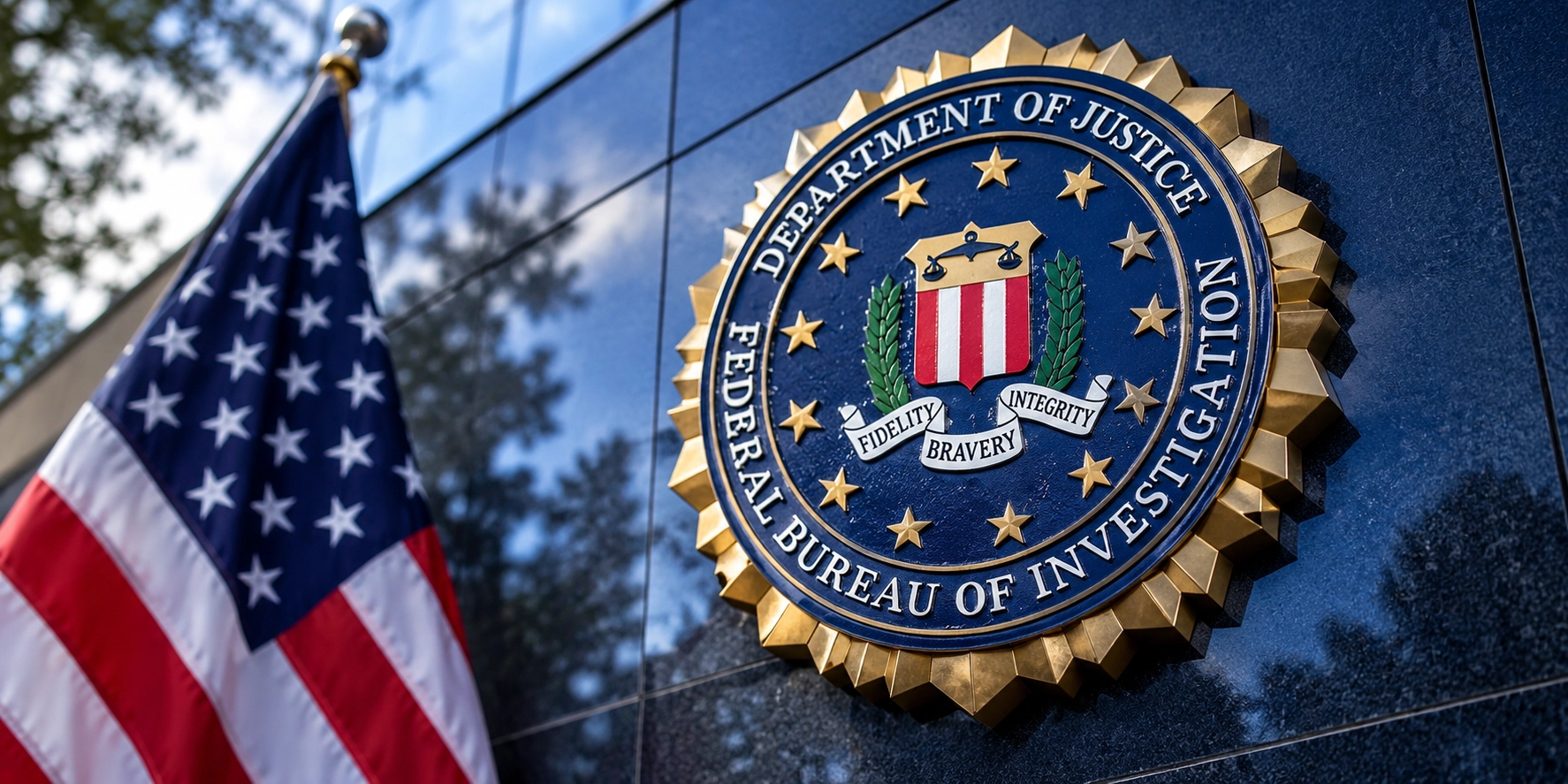
The Federal Bureau of Investigation is investigating a suspected cyber intrusion affecting its National Crime Information Center (NCIC) database, the core information-sharing network relied upon by police departments across the United States, according to a report by CNN.
The report, published on Friday evening, 20 November 2026, cited two unnamed people briefed on the inquiry who indicated that bureau officials became aware of the apparent breach shortly before FBI Director Kash Patel made a television appearance on Thursday, 19 November. Because the NCIC connects federal, state, local, and tribal law enforcement agencies to real-time warrants and criminal justice files around the clock, even a preliminary investigation carries significant implications for national security and public safety.
At this stage, the claims rely on CNN’s anonymous sources. Subsequent reporting by Reuters and Washington broadcaster WUSA9 repeated CNN’s account rather than offering independent confirmation. No official statement confirming the incident has been issued by the FBI, its Criminal Justice Information Services (CJIS) Division, the Department of Justice, or the Cybersecurity and Infrastructure Security Agency (CISA), none of which have responded to media requests for comment.
Operated continuously since 1967 by the CJIS Division in Clarksburg, West Virginia, the NCIC serves as an electronic index allowing field officers to verify records within seconds. According to the FBI’s official NCIC Privacy Impact Assessment, the database organises records across 16 person-related files (including active arrest warrants, missing persons, protection orders, and sex offender registries) and seven property-related files tracking stolen vehicles, firearms, and boats, alongside an Image File and an Originating Agency Identifier (ORI) File for authorised terminals.
The system also maintains a direct automated interface with the Royal Canadian Mounted Police and handles international enquiries routed through Interpol’s Washington bureau. To protect the network, the FBI CJIS Security Policy mandates multi-factor authentication, triennial security audits, and detailed access log retention for at least 365 days.
Security experts note that any unauthorised access raises two main concerns: the exposure of confidential law enforcement queries and the potential tampering with active records. Speaking to CNN, a former FBI official who led investigations into cybercriminal groups highlighted why data integrity is paramount. “Every day, officers across the country rely on NCIC to identify wanted fugitives, check for outstanding warrants, and access information that can directly impact officer and public safety,” the former official said. “My concern isn’t simply whether hackers gained access to sensitive information, although that is an issue, but whether they could compromise the accuracy of the information that officers rely on.”
However, those scenarios remain theoretical risks rather than verified outcomes. No public evidence indicates that records were copied, modified, or deleted, nor have any operational outages been reported across American police departments. Furthermore, no extortion or ransomware group has claimed responsibility, and investigators have not publicly named a suspect or entry vector.
This development follows a separate cyberattack in September 2026, when the extortion group ShinyHunters compromised a third-party contractor portal hosting the bureau’s recruitment site, FBIJobs.gov, exposing applicant and employee data. While the timing has drawn heightened attention due to a second high-profile incident involving bureau infrastructure in recent months, authorities have not linked the two events, and the NCIC operates on restricted, segregated CJIS architecture distinct from external hiring portals.
Amid internal discovery of the suspected NCIC issue, Director Patel appeared on Fox News’s Hannity programme on Thursday evening to promote Operation Winter Shield, a bureau cybersecurity campaign he described as “the backbone infrastructure by which the FBI has engaged over 750 private sector companies.” Without addressing the NCIC inquiry, Patel defended the bureau’s defensive upgrades. “Other administrations could have made these updates, but they didn’t,” he said. “We are staying ahead of the curve and making up for lost time.”
Until federal authorities release formal forensic conclusions, individuals should remain cautious of opportunistic scams. Fraudsters frequently exploit headlines about police database breaches to place deceptive phone calls claiming a victim’s arrest warrant or criminal record has been exposed and demanding payment to resolve the issue, a tactic official law enforcement agencies never use.

Community discussion
Join the conversation
0 comments
Be the first to join in
There are no comments yet. Sign in to start a thoughtful discussion.
Sign in to comment
Join the conversation with your Secritic account. Comments are available to signed-in readers.