
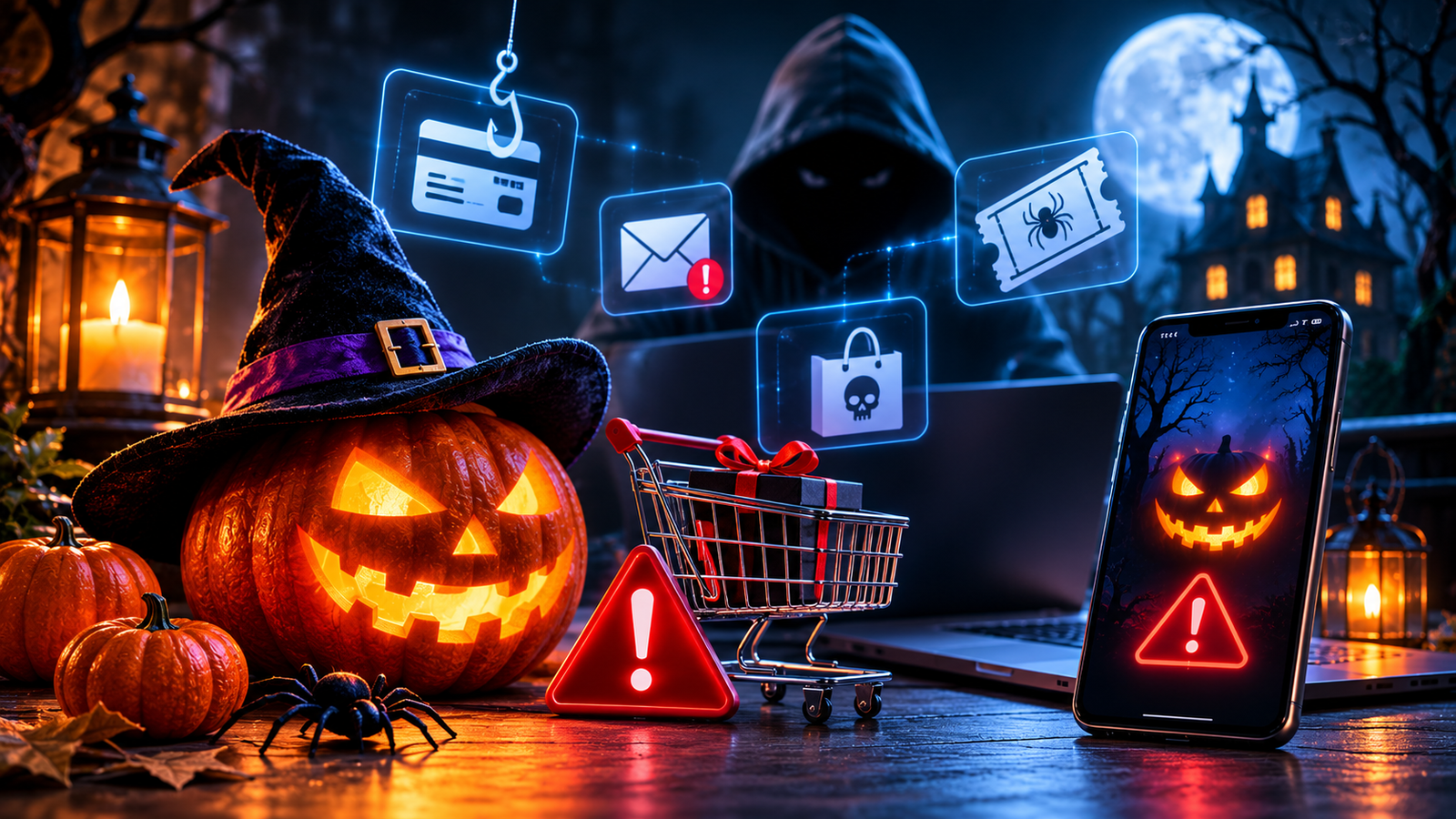
An attractive Halloween offer can look like a great deal. But what if the mask never arrives, the prize message is fake, or the event you paid for does not exist?
Recent research and consumer warnings have highlighted several Halloween-related scams involving online shops, prize messages and seasonal events. Some advertisements also use convincing videos to make products look better than they really are.
These reports do not mean that every Halloween promotion is suspicious. They do show why it is important to check an offer before paying or sharing personal information.
Here is what researchers have found, how these tricks work and what you can do to protect yourself.

1. Fake costume shops are advertising masks that may not match the pictures
One of the clearest Halloween shopping concerns involves advertisements for realistic-looking masks and costumes.
On 23 October 2026, Get Safe Online, working with scam detection specialist Ask Silver, warned about reports involving social-media advertisements for so-called hyper-realistic silicone masks.
Some advertisements offered these masks for around £30 and claimed they could transform the wearer into a celebrity, monster or film character. Get Safe Online noted that genuine silicone masks of this quality typically cost hundreds of pounds.
Customer reviews on consumer feedback websites described two problems: some buyers received cheap plastic masks that looked very different from the advertised products, while others said their orders never arrived.
This does not mean every inexpensive mask is fake. The concern is the difference between what some advertisements promise and what customers report receiving.
How can this happen?
Imagine finding an advertisement for a highly realistic monster mask. The video looks professional, the product appears detailed and the price is much lower than similar products elsewhere.
You visit the shop and place an order. But the mask that arrives may be a cheap plastic imitation. In another case, the seller may never send anything.
Before buying, search for the seller independently. Check customer reviews on other websites, compare the product with similar items and look for clear contact and refund information.
2. AI may make misleading product advertisements look more realistic
Artificial intelligence is adding another challenge for online shoppers.
Get Safe Online reported that researchers believe many videos promoting these realistic-looking masks were created or enhanced using AI. The videos can make a product appear more impressive than the item a customer actually receives.
AI tools can also help create product images, promotional videos and website content. As a result, an unfamiliar shop may look professional even when its business details are unclear.
However, using AI does not automatically make an advertisement fraudulent. Legitimate businesses also use AI in their marketing.
The warning sign is when impressive images or videos are used to support an offer that cannot be independently verified.
What shoppers should remember
A realistic product video is not proof that the product is genuine or high quality. Check the seller and look for independent customer experiences before making a payment.
3. Fake Halloween giveaways are using the names of well-known retailers
Another concern comes from emails and promotions that use familiar company names to make fake giveaways appear genuine.
On 27 October 2026, Bitdefender Labs published research into Halloween-themed campaigns observed between 1 September and 22 October 2026.
Researchers identified emails impersonating retailers including Costco and Tractor Supply.
One message advertised a supposedly free Halloween decorating kit using Tractor Supply’s name. Another used Costco’s branding to promote a limited Halloween offer and a shopping-feedback survey.
Researchers also identified a fake promotion offering a €250 bol.com gift card. The real retailers were not associated with these campaigns.
What happens after someone clicks?
A fake giveaway may begin with an email promising a free product or gift card. The recipient clicks a link and reaches a page displaying a familiar company name and logo.
The page may ask the visitor to complete a short survey or enter personal information. It may then claim that the person has won a prize and request a small delivery or verification payment.
That payment request can be part of the trick.
Bitdefender warns that these pages may collect names, addresses, payment-card details and account credentials.
Simple example
You receive an email claiming that you have won a free Halloween gift. After answering a few questions, the website asks you to pay a small delivery fee.
You believe you are paying to receive a free gift, but you may actually be giving your card details to an untrustworthy website.
If a retailer is running a genuine giveaway, check its official website or app. Do not assume that a familiar logo makes an unexpected promotion real.
4. Halloween text messages may promise prizes or rewards that do not exist
Some Halloween-themed campaigns are delivered through text messages rather than shopping websites or email.
Bitdefender Labs identified SMS campaigns using claims about lottery winnings, reward points, account credits and supposed deposits.
One French-language campaign targeted users in Canada with messages about Halloween prizes and expiring credits. Researchers identified 107 unique domains connected with that campaign.
This figure refers to domains used in the campaign. It does not represent the number of victims or successful scams.
Another English-language campaign used Halloween-themed messages suggesting that money or credits had appeared in the recipient’s account.
Why do these messages create a risk?
They try to make people act before checking whether the offer is real.
Example of the approach
“Your Halloween reward is ready. Claim it before midnight.”
A message like this may make you think that you have won something or that a reward is about to expire.
But an unexpected message is not proof that you have a prize waiting. Its link may lead to a page asking for personal or account information.
If you receive an unexpected reward message, do not use its link. Visit the company’s official website independently and check whether the promotion exists.
5. Fake Halloween events can leave ticket buyers out of pocket
Halloween is also a popular time for haunted attractions, horror experiences, themed parties and seasonal events.
But not every event advertised online is genuine.
In its 23 October warning, Get Safe Online reported fake or misleading attractions, including supposed haunted experiences and seasonal events.
A person may buy a ticket online, travel to the advertised venue and discover that the venue has never heard of the event. In other cases, the organiser may disappear after receiving payments.

How to check an event before buying tickets
Search for the event separately instead of relying only on the advertisement or ticket page.
- Check whether the venue lists the event on its official website.
- Look for information about the organiser.
- Read independent reviews where available.
- Contact the venue using details found on its own website.
- Read the ticket conditions and refund policy before paying.
For example, if an unfamiliar website is selling tickets for a haunted attraction at a local venue, contact that venue directly and ask whether the event is real.
A professional-looking ticket website is not enough to confirm that an event exists.
Also Read Hackers Stole $6.3 Billion From Binance in 20 Minutes. Here’s How Read Secritic’s investigation into the reported cryptocurrency theft, how the attack unfolded and what investigators have found so far.How to protect yourself from Halloween scams
You do not need to avoid online shopping or Halloween events. A few checks can help you make safer decisions and avoid common mistakes.
Check the seller before buying
Search for the business name separately from the advertisement. Look for independent customer reviews, a real way to contact the seller and clear information about returns.
Be careful if the only information available is on the shop’s own website. A seller’s own reviews and promotional claims are not independent proof.
Compare the price with other shops
If a mask is being sold for a fraction of the usual price, compare it with similar products from established retailers.
A discount is not automatically suspicious. But an unusually low price combined with an unfamiliar seller, limited contact details or copied product images deserves closer attention.
Visit the official website yourself
If an email claims that a retailer is giving away free gifts, do not use the link in the message. Open the retailer’s official website or app yourself and look for the promotion.
This helps you avoid pages that copy a real company’s name, logo or design.
Check the event with the venue
Before buying tickets, confirm that the attraction or party is actually taking place. Use contact details from the venue’s official website, not only the ticket seller’s page.
If the venue cannot confirm the event, do not pay until you have a reliable explanation.
Use a payment method that offers protection
Where available, use a credit card or a recognised payment service that offers buyer protection. Check the provider’s terms so you understand what protection applies.
Be especially cautious if an unfamiliar seller insists on payment by bank transfer, gift card, cryptocurrency or another method that may be difficult to reverse.
Never share passwords or verification codes
An unexpected prize or giveaway should not require your banking password or one-time security code.
Never share these details with someone who contacts you unexpectedly. A genuine company should not ask you to disclose your password or security code to release a prize.
These precautions are consistent with guidance from the UK National Cyber Security Centre and the US Federal Trade Commission.
What should you do if you have already responded?
If you have paid a suspicious seller or entered your card details on an unfamiliar website, act quickly. The next steps depend on what information you shared.
- If you made a payment, contact your bank or card provider immediately. Explain what happened and ask whether the payment can be stopped, disputed or reversed. Do not wait for the seller to respond.
- If you shared a password, change it. Change it on the affected account and anywhere else you reused it. Turn on two-step verification where available.
- If you shared card details, contact your card provider. Ask whether the card should be blocked or replaced and monitor your transactions for unfamiliar payments.
- Keep the evidence. Save the message, website address, screenshots, order confirmation and payment records. These details may help your bank or the relevant authority investigate.
- Report the incident. Use the official reporting service for your country. The UK and US have different reporting routes, explained below.
For people in the UK
- Forward suspicious text messages to 7726. This is a free reporting service supported by most UK mobile providers.
- Forward suspicious emails to report@phishing.gov.uk.
- Report suspicious websites through the NCSC website reporting service.
- If you have lost money, report the fraud through Report Fraud in England, Wales and Northern Ireland. In Scotland, contact Police Scotland on 101.
These reporting routes are explained by the National Cyber Security Centre.
For people in the United States
- Report a scam or suspicious business through the Federal Trade Commission’s ReportFraud service.
- If you paid by card or shared payment information, contact your bank or card issuer using the number on the back of your card or its official website.
- If you believe someone has misused your personal information, visit the official IdentityTheft.gov service for recovery guidance.
The FTC also provides guidance on what to do if you have been scammed.
If you only opened a suspicious link but did not enter information, download a file or approve a payment, the risk may be lower. Close the page and avoid interacting with it further. If you downloaded something or entered account details, take the relevant security steps rather than assuming everything is safe.
Final thoughts
Recent Halloween reports show how seasonal shopping and entertainment offers can be used to mislead consumers.
The examples are different, but the risks are similar: people may pay for products that never arrive, share information on fake giveaway pages or buy tickets for events that cannot be confirmed.
You do not need to avoid every online shop or Halloween event. Take a moment to check the seller, confirm the promotion and verify the event before paying.
A quick check before you click or buy can help prevent a much bigger problem.
Sources and further reading
-
Get Safe Online — Don’t Let Scammers Spoil Halloween
23 October 2026. Mask advertisements, suspected AI-enhanced videos, customer complaints and fake seasonal attractions. -
Bitdefender Labs — Halloween Scams Return on Email, SMS and Social Media Ads
27 October 2026. Research into Halloween-themed campaigns observed from 1 September to 22 October 2026. -
UK National Cyber Security Centre — Phishing Scams
Official UK guidance on recognising and reporting suspicious messages and websites. -
UK National Cyber Security Centre — Shopping and Paying Safely Online
Guidance on safer online shopping and payments. -
US Federal Trade Commission — Are Ads on Social Media Vetted or Checked for Scams?
Consumer guidance on checking social-media advertisements before buying. -
US Federal Trade Commission — ReportFraud
Official US service for reporting fraud and suspicious business practices.
Editorial note: This article is based on research and consumer warnings available on the publication date. It should be updated when new verified information, official warnings or significant developments become available. Any update should include the actual date of review.
Community discussion
Join the conversation
0 comments
Be the first to join in
There are no comments yet. Sign in to start a thoughtful discussion.
Sign in to comment
Join the conversation with your Secritic account. Comments are available to signed-in readers.