
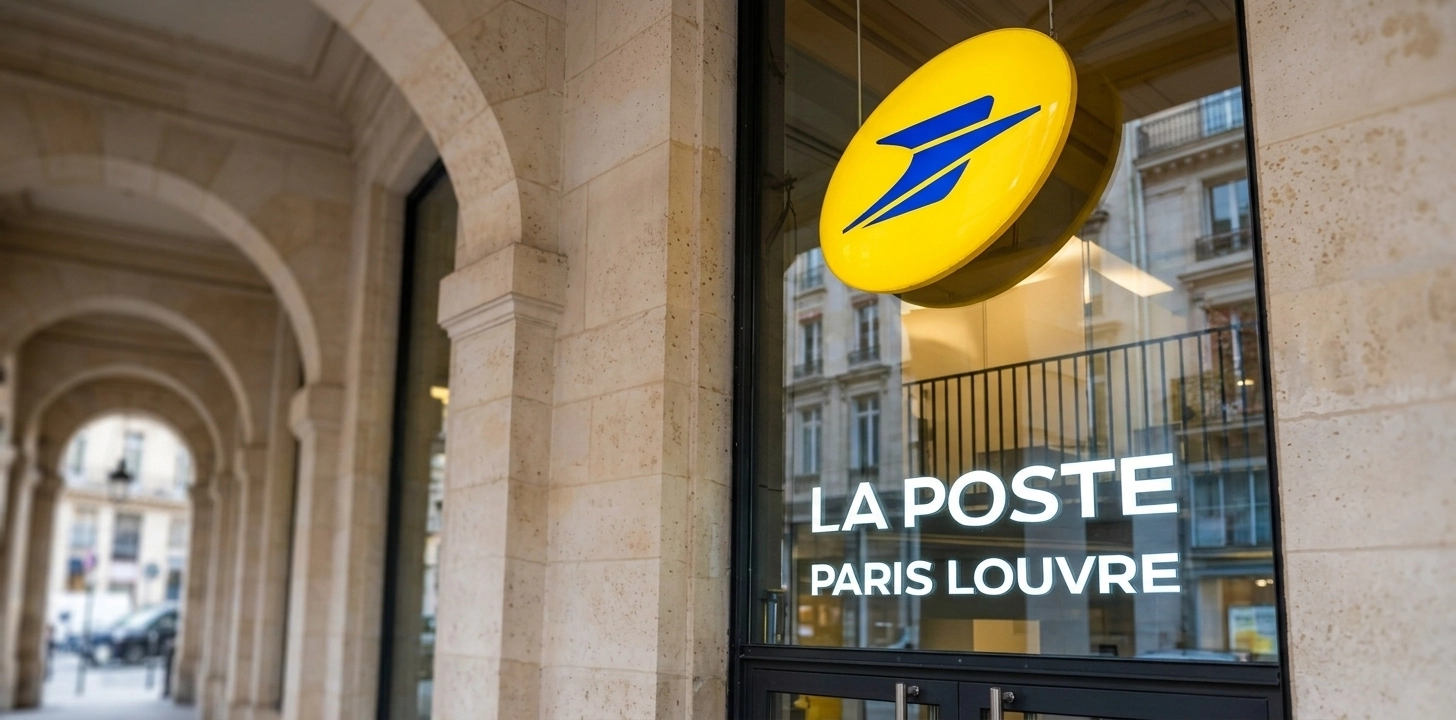
A cyberattack on Maileva, a business-mail service operated by Docaposte, part of France’s La Poste group, exposed the names and postal addresses of approximately 22 million people. La Poste confirmed the theft on November 14, almost two months after the attack disrupted the service.
Many of those affected may never have heard of Maileva, let alone opened an account with it. They were people who received letters from organisations that used the platform to prepare, print and send their correspondence. Hospitals, medical laboratories, housing providers and public services can therefore have their recipients’ information processed by Maileva even when those people have no direct relationship with the company.
Maileva is designed for organisations rather than ordinary consumers. Its customers use the platform to send documents such as invoices, payment reminders and administrative letters without managing the printing and postage themselves. Figures reported by La Dépêche indicate that the platform had more than 70,000 individual users and processed approximately 180 million documents in 2024. Maileva also said several thousand client organisations were affected by the incident. These are different measures: platform users are not companies, and neither figure represents the number of individual recipients.
The scale of the breach became clearer on November 13, when Cyberattaque.org reported Maileva’s written confirmation that first names, surnames and postal addresses belonging to 22 million people had been stolen. La Poste confirmed the figure to AFP the following day, as reported by TF1.
The 22 million figure is not the number of Maileva accounts. It refers to distinct recipients after duplicate entries were removed. Internal Docaposte material reported by Frandroid and Cyberattaque.org contained approximately 39 million mail references. One person could appear several times after receiving letters from different organisations. The 39 million figure therefore describes references in the records, not 39 million people or proof that the contents of that many letters were downloaded.
The timeline has emerged partly through internal documents reported by Frandroid, rather than from a complete public account by La Poste. According to those documents, suspicious activity began on September 9, 2026, and was detected on September 16 or 17. The documents reportedly described an attacker exploiting a vulnerability in a Maileva application. These technical details come from the internal notice, not a public forensic account from La Poste.
Maileva suspended its services at approximately 07:00 on September 23 while it investigated and secured the platform. Its initial communication to customers focused on unauthorised access to some client accounts and attempts to use the service to send fraudulent correspondence. Services resumed on September 29. The wider exposure of personal information emerged through customer notifications in the weeks that followed.
On October 9, Santé au Travail en Cornouaille, a workplace health service in Quimper, disclosed that an unauthorised person had accessed Maileva’s mail-tracking database. Its notice identified recipient names, postal addresses and filenames associated with correspondence. It also listed information about senders, including names, identifiers and email addresses. The organisation warned that a filename or the context of a letter could indirectly reveal information about someone’s health or professional circumstances. It said it had no evidence that the contents of its own letters had been consulted or extracted.
Other organisations subsequently disclosed exposure involving their correspondence. These included IZILO, the Lorient area’s public transport network; Novabio and other laboratories in the Inovie network; and housing providers Flandre Opale Habitat and Altéal. Their notices describe different categories of information and do not establish that every customer or recipient of those organisations was affected.
The distinction between mail-tracking information and the contents of a letter matters. Metadata is information about correspondence, such as the sender, recipient and filename. A filename can sometimes reveal the subject of a document, but access to a tracking record does not by itself prove that the document was opened. Some organisations, however, have warned that particular letters may have been accessible.
One example involves Hôpital Foch in Suresnes. The hospital sends certain payment reminders through Kiwee, which arranges for Maileva to print and post them. In its official notification, the hospital said reminders sent between September 9 and September 23, 2026, could have been read by an attacker. They contained patients’ names and addresses, invoice numbers, dates of care and amounts owed.
The hospital said those letters did not include diagnoses, descriptions of treatment or patients’ bank details. They could nevertheless reveal that someone had received care at Hôpital Foch, which the hospital considers sensitive information. Foch said it learned on October 28 that the contents might have been consulted and warned patients about possible impersonation by criminals posing as the hospital, Kiwee or health-related organisations.
Flandre Opale Habitat issued a separate warning on November 3. Its notice said personal information contained in certain letters sent over the previous ten years could have been accessed. Depending on the correspondence, this could include names, addresses, email addresses, customer numbers, housing information and invoice amounts. The housing provider explicitly cautioned that this did not mean the information had necessarily been consulted or used. The ten-year period relates to its own historical correspondence; it should not be treated as the confirmed age of every record in the wider breach.
Financial information also needs to be separated into two categories. The main recipient data confirmed by Maileva concerned names and postal addresses, and individual recipients’ bank details and payment-card information were not reported as exposed in that dataset. Separately, Frandroid, citing internal Docaposte documents, reported that a billing application used for business customers may also have been exposed. The information described included company IBANs, invoice amounts and accounting contact details. This is distinct from the main recipient-data incident: it does not mean that the bank details of the 22 million individuals were stolen. The billing-system finding comes from investigative reporting and should not be presented as a separate public confirmation by La Poste.
Maileva reported notifying France’s data protection authority, the CNIL, and filing a criminal complaint. La Poste said a judicial investigation was under way. The attacker has not been publicly identified, and no verified public account has established the motive. As of November 15, the reporting reviewed for this article had not established that the stolen information had been published or offered for sale. That does not rule out private circulation or use.
The incident also raises questions about who must inform people when a supplier loses their information. Under the GDPR, a data processor handles personal information on behalf of another organisation. The organisation deciding why and how the information is used is generally the data controller. Maileva acts as a processor for correspondence sent through its clients’ accounts, while those clients generally act as controllers.
The CNIL’s guidance on personal data breaches explains that a processor must notify its controller without undue delay. The controller must assess the risk and notify the regulator when required. People must also be informed without undue delay when the breach is likely to create a high risk to their rights and freedoms, subject to specific exceptions. This does not mean every organisation must automatically contact every recipient after every incident.
There is no confirmed public search tool through which individuals can check whether their details appear in the affected Maileva records. The company has informed its client organisations, which are responsible for assessing which recipients were affected and communicating relevant information. Frandroid reported that no consolidated figure had been provided for how many individuals had received direct notifications. If you have received correspondence from a hospital, laboratory, housing provider or public service that uses Maileva, check its official notices. If you are uncertain, contact the organisation through a website or telephone number you find independently, and ask its data protection officer whether your correspondence was affected.
Readers in the UK and elsewhere in Europe should not assume they are among the confirmed victims. No verified public breakdown establishes how many people outside France were affected. Someone living abroad who received correspondence from a French organisation using Maileva could potentially appear in the records, but that possibility is not a confirmed victim count.
For people whose information may be involved, the main practical concern is targeted fraud. Be alert to unexpected invoices, overdue-payment reminders and demands claiming to come from hospitals, landlords, laboratories or debt collectors. A message that mentions a genuine organisation or a real payment amount is not automatically legitimate. The confirmed recipient dataset primarily involved names and postal addresses; it does not establish that every affected person’s email address, telephone number or password was exposed. Criminals may combine information from other sources to make contact more convincing.
Verify payment requests using contact details from an organisation’s independently checked website, not links or telephone numbers in an unexpected message. There is no reason to change every password solely because of this breach, but change credentials if an organisation separately confirms that your account details were compromised. If you have already paid a suspicious invoice, contact your bank immediately, explain that the payment may be fraudulent and ask whether it can be stopped or recalled. Keep the message and payment records, and report the incident to the appropriate authorities.
The people caught up in this breach did not necessarily choose Maileva or even know it existed. They trusted an organisation with their information, and that organisation relied on a supplier to deliver its correspondence. The incident shows why personal data needs protection at every stage, including the less visible services that prepare and send an ordinary letter.
Community discussion
Join the conversation
0 comments
Be the first to join in
There are no comments yet. Sign in to start a thoughtful discussion.
Sign in to comment
Join the conversation with your Secritic account. Comments are available to signed-in readers.