
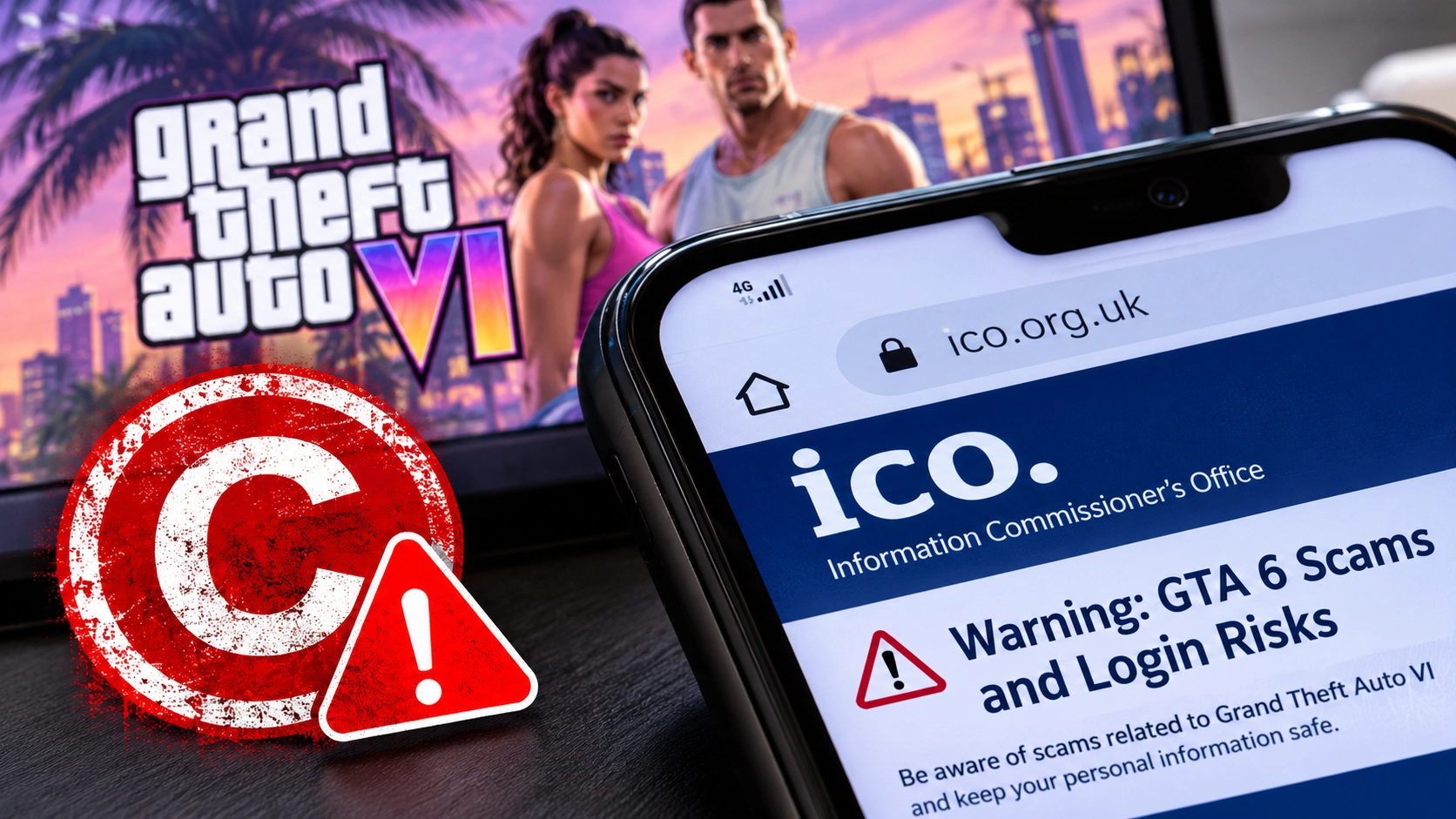
Britain’s data protection watchdog has warned players to watch out for phishing emails, malicious links and recycled passwords ahead of tomorrow’s release of Grand Theft Auto VI. In an official announcement on 16 November 2026, the Information Commissioner’s Office (ICO) cautioned that criminals frequently exploit major cultural launches to trick people into handing over login details or installing harmful software, putting email inboxes and financial accounts at risk alongside gaming profiles.
The regulator’s intervention is a preventative warning rather than a response to a breach at Rockstar Games, Sony or Microsoft. Even so, its timing reflects concern that excitement around Thursday’s launch on 19 November 2026 will push eager buyers towards unofficial download links, bogus early-access invitations and counterfeit promotional emails.
In its five-point guidance, the ICO specifically urged players to treat unexpected messages promising free downloads, exclusive content or early access with caution, and to verify that websites are genuine before entering any personal or payment information.
At the centre of the watchdog’s alert is a simple habit that turns a gaming scam into a wider personal security problem: using the same password across multiple websites. “Reusing passwords across multiple accounts means that if one gaming profile is compromised, attackers may attempt to use those same details to access email or financial accounts,” said Ian Hulme, Group Director of Regulatory Assurance and Cyber at the ICO, in the 16 November statement.
Cybersecurity specialists call this automated testing of stolen login pairs across unrelated websites credential stuffing, a term the ICO did not use itself, though its warning describes the exact risk facing anyone who protects an online store, console account and bank login with identical credentials.
Independent threat intelligence published ahead of the regulator’s alert shows that fraudsters have already built a range of traps around the title. On 3 November 2026, cybersecurity firm Netcraft published an investigation into GTA VI phishing and malware lures covering suspicious domains registered between 1 July and 27 October 2026.
Netcraft found that criminals were using different mechanisms rather than a single type of attack: domains such as gta6cyberleek[.]com distributed a Trojan executable named GTAVI.exe, while cyberleek[.]click demanded $100 in cryptocurrency alongside a suspicious launcher file, and sites including mygta6[.]icu and gta6keycodes[.]com operated survey and affiliate content lockers designed to harvest personal details or generate commission without delivering a game. Readers should not visit any of these domains.
Other security researchers have documented separate malware campaigns using fake Grand Theft Auto VI installers over recent months. In late August 2026, Malwarebytes reported that fake GTA 6 demo websites were distributing the Vidar information stealer inside a disguised installer file, followed on 1 September by fake leaked-copy pages designed to drain cryptocurrency wallets. An analysis published on 13 November by threat-research firm Doppel also highlighted earlier findings by Huntress in September 2026, in which attackers padded fraudulent installation ISO files to around 100 gigabytes so they looked like genuine modern game downloads while concealing remote-access Trojans, ransomware or information stealers.
More recently, a 14 November report by Neowin described another fake PC download package engineered to evade automated analysis sandboxes before stealing saved browser data, Steam logins and cryptocurrency wallet information.
Information stealers, often shortened to infostealers, are particularly damaging because they rarely announce themselves with an obvious error message. Once run on a Windows PC, a typical infostealer quietly copies saved passwords, autofill details, cryptocurrency wallet files and browser session cookies, which are small authentication tokens that keep a user signed into email, social media and shopping accounts without re-entering a password. Just as criminals have exploited fake account warnings during a real Microsoft 365 outage or hidden malicious links inside unsolicited Google and Outlook calendar invites, gaming lures rely on urgency to persuade targets to bypass normal caution.
Checking what a genuine launch looks like is the quickest way to spot almost every scam circulating this week. According to Rockstar Games’ official release announcement and the official Xbox Store listing for Grand Theft Auto VI, the game launches on Thursday, 19 November 2026 exclusively on PlayStation 5 and Xbox Series X|S. There is no PC edition at launch, no Android or iOS mobile version, no public demo and no playable early-access programme.
While players who bought a digital copy through the official PlayStation Store or Microsoft Store have been able to pre-load the files onto their consoles ahead of release, pre-loading simply downloads encrypted game data early so it unlocks at launch time; it does not provide early gameplay, and Rockstar is not emailing out secret PC installers or beta keys.
Protecting your accounts before launch day takes only a few minutes. Buy and download the game solely through official console storefronts or established high-street and online retailers, and ignore advertisements or social media posts offering free keys, cracked PC builds or early access. Give your PlayStation Network, Xbox, Rockstar Games and primary email accounts strong, unique passwords stored in a reputable password manager, and turn on two-step verification, ideally using an authenticator app rather than SMS text messages, so a stolen password alone cannot unlock your profile.
If you or someone in your household has already downloaded a suspicious installer or entered login details on an unofficial site, act from a separate, clean device such as a phone that was not used to open the file. Change the passwords on your email, console and financial accounts immediately, and use each service’s security settings to sign out of all active browser and device sessions; because infostealers copy active session cookies, changing a password without revoking existing sessions can leave an attacker logged in.
Run a full security scan on the affected computer before signing back into sensitive accounts, and consider reinstalling Windows if malware is confirmed. Anyone in Britain who receives a suspicious email about the launch can forward it to the National Cyber Security Centre’s Suspicious Email Reporting Service at report@phishing.gov.uk, while scam text messages can be forwarded free of charge to 7726.
If you have lost money or shared banking details, contact your bank immediately. Many British banks can be reached directly by dialling 159, and you should also report the incident to Report Fraud, the UK’s national reporting centre (formerly Action Fraud), online or on 0300 123 2040. Readers in the United States can report phishing sites and online fraud to the Federal Trade Commission’s ReportFraud portal or the FBI’s Internet Crime Complaint Center at ic3.gov.
Community discussion
Join the conversation
0 comments
Be the first to join in
There are no comments yet. Sign in to start a thoughtful discussion.
Sign in to comment
Join the conversation with your Secritic account. Comments are available to signed-in readers.